
Due to the ongoing transformation of arboriculture with digital innovation, both professionals and students are increasingly in search of arborist supplies near me. It is to facilitate fieldwork, research, and technical training. The combination of new materials, intelligent design and enhanced production methods has turned the ordinary tree tools into very advanced climbing systems. In the current education and technological society, it is necessary to know these tools in order to be safe and perform well.
Technological Development of Tree Equipment
In the past, tree climbing used to be based on the use of primitive ropes and mechanical methods. Arborist supplies today include the use of engineered fibers and lightweight alloys and precision mechanical apparatus that was developed to increase safety and efficiency. Dynamic climbing ropes are designed to take in shock loads and the static ropes remain stable during controlled ascents and descents.
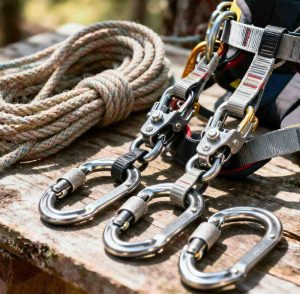
The ascenders and descenders which are used mechanically have a sophisticated cam system to facilitate the movement along the rope lines. Carabiner with high-strength that is made of aircraft-grade aluminum lowers the overall weight but does not affect the durability.
To the student pursuing environmental science, forestry or mechanical engineering, these developments are a demonstration of the direct impact of applied technology. It applies to enhancing safety and efficiency in the real world.
Training and Education on Arboriculture
Professional tree climbing is not only a technical subject but it is also a physically challenging sport. The training programs lay stress on the rope mechanics, load distribution principles, and techniques of rescue. The availability of quality arborist materials in the community means that the trainees can have hands-on experience with the equipment. It is for the purpose that they can be ready to use the same in the real world.
Helmets that have inbuilt communication systems improve coordination by the team. Friction saving devices save tree bark and also show the role of material science to the environment conservation. Using modern climbing gears in the training programs, the learning institutions can provide a gap between theoretical and practical learning.
Education on equipment specifications including its breaking strength rating and certification standards also imparts skills of critical evaluation. Students do not only learn how the gear is used but how to evaluate the level of compliance and performance measures.
Intelligent Design and Safety Engineering
Technology has been a great factor in mitigating high-risk working conditions. Shock absorbing lanyards, anti-slip climbing shoes and highly developed pulley systems give the arborists the ability to move freely in the complicated canopy systems. The innovations are the outcome of the research and testing in the field.
The key role is played by material science. Artificial fibers in the ropes have superior tensile properties and at the same time they are lightweight and weatherproof. Patterns of stitching used to reinforce harnesses can equally share the stress around the areas of loads. This kind of engineering information is an indication that accuracy in manufacturing has a direct impact on safety results.
Local Availability
Immediate equipment access is frequently demanded by storm damages tests, research missions, and routine tree maintenance. The ability to have the parts locally available means that the professionals will be able to have the worn out parts replaced. At the same time, it upholds the safety standards. On an academic level, being near to credible suppliers is also an advantage to educational facilities where workshops or certification are being done.
The Interdisciplinary Integration of Knowledge
Tree climbing gear overlaps physics, environmental science, engineering and occupational safety. The rope systems on arboriculture show the concepts of force distribution and mechanical advantage. Rigging configurations explains the way load management methods reduce the stress on trees.
YOU MAY ALSO READ: Tree Saving Technology: A Young Tree Appraiser Fights For City Trees. This discusses larger relationships between technology and environmental education. These discussions are supplementary to the increased significance of the technologically sophisticated arborist equipment in contemporary training facilities.
Conclusion
The arborist supplies around me are indicative of a wider change towards arboriculture driven by technology. The modern tree tools and climbing systems have integrated both the engineering accuracy and environmental consciousness to promote both safe and effective access to canopies.