
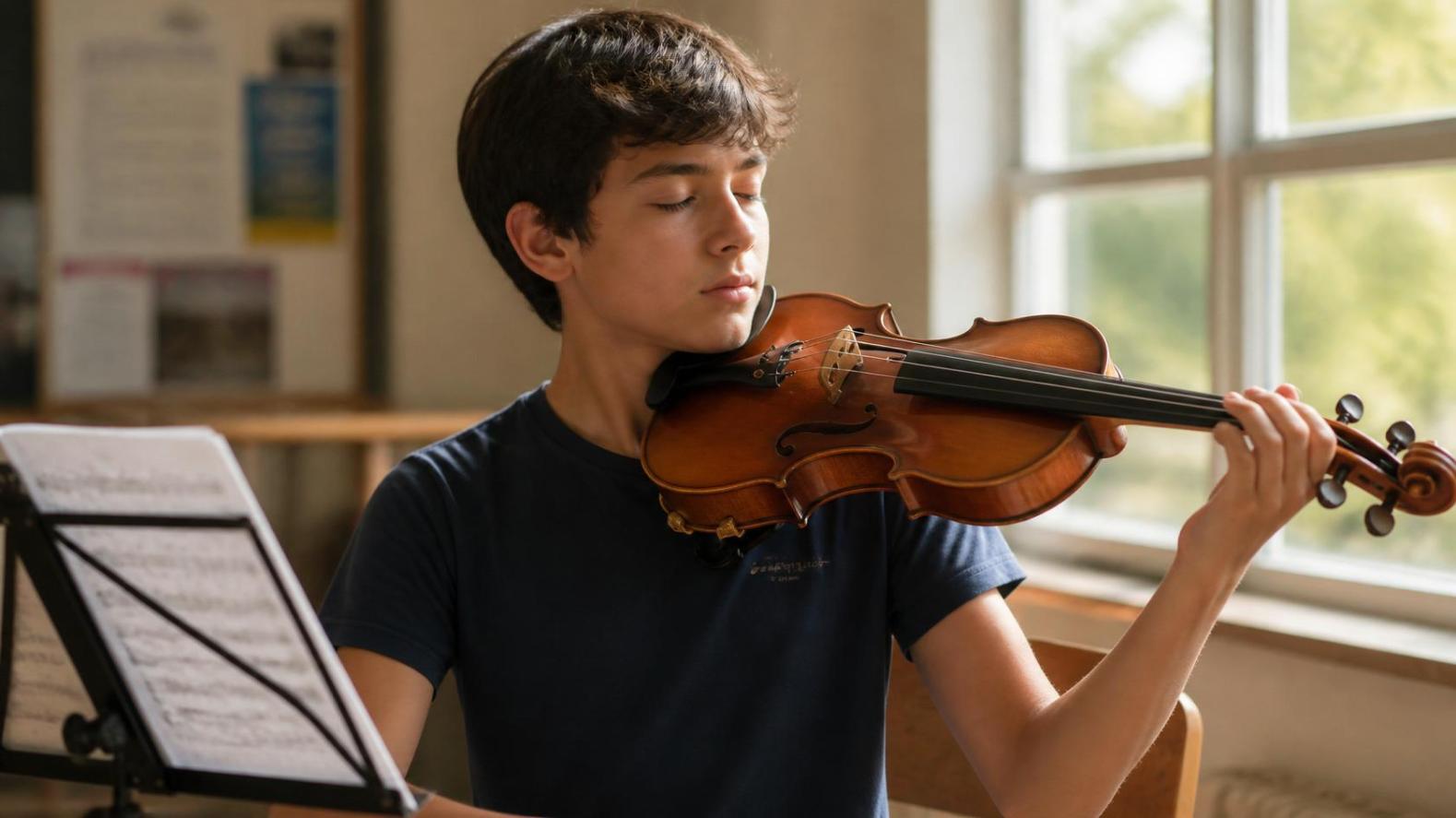
Outside of Cremona, a luthier told a student that “a good instrument argues with you until you listen properly.” This is a strikingly human sentiment that machines, at least thus far, struggle to achieve.
Despite decades of advancements in digital tuners, AI practice assistants, and simulated string instruments, violins remain proof of the limitations of technology.
The ear, it seems, is intelligently stubborn.
Technology Can’t Feel
Today’s tuning programs can tell a student that their pitch is 440 Hz, but they can’t interpret that an audible anxiety tremor is present in their vibrato or that their bow arm is tense from nervousness due to a looming audition.
This gap is not trivial. A violin teacher in Austin and an All-State audition coach with over twenty years of experience summed it up during a recent masterclass: “The tuner tells you where the note is. It doesn’t tell you where the feeling is.”
The divide between measurement and meaning is at the crux of a primary issue in today’s music education. Most schools adopt new technology with enthusiasm and encourage students to do the same, and the research supports this. Technology benefits music education meaningfully, and nobody serious argues otherwise.
But there’s a distinction between something that facilitates learning and something that replaces discernment. When it comes to genuine musical discernment, the kind that identifies whether a phrase feels optimistic or pessimistic, whether a crescendo is too sudden, or whether a young musician is playing with integrity or mere restraint, the human ear wins. Every single time.
Why Educators Return to Live Listening
Ask any veteran string teacher what the biggest shift to their pedagogy has been, and technology would almost never be their first answer. More likely, they’d cite a specific rehearsal and a specific student, a moment a machine would have graded as “correct” but that was, in the context of music, completely empty of meaning.
Not long ago, I attended a middle school orchestra rehearsal where the conductor stopped the group mid-phrase. Not because anyone played a wrong note. She simply said the entire section sounded “polite instead of alive.”
The kids adjusted after she sang the phrase back with a little more weight on the second beat. No software would have flagged that. No app could have. It required a trained ear to catch a problem that pitch-detection tools aren’t built to recognize.
This is precisely where educational technology falls short. It can flag wrong notes, inconsistent rhythm, even tempo drift. What it cannot do is evaluate the purpose or intention behind a performance. The difference between a performer who plays a piece correctly and one who plays it with meaning is something only a teacher, a mentor, or a deeply experienced listener can identify.
The Classroom as a Living Laboratory
Technology works best in music education when it handles the basics so the teacher doesn’t have to. Tracking practice time, flagging timing inconsistencies, measuring intonation trends, these are tasks software does well, and offloading them frees the teacher to work on what actually matters: the feel, the interpretation, the story behind the notes.
One school administrator described it plainly: “outsourcing the boring parts to focus on the meaningful parts.” Clip-on tuners have largely made tuning-by-ear a lost ritual, but nobody is seriously proposing that AI should dictate the phrasing of a Bach minuet played by a twelve-year-old.
And maybe the most honest argument for keeping traditional ear training comes from the students themselves. Those who grew up surrounded by technology are often the first to admit, when they go without devices and just listen, that something changes.
One student said that going without technology during a chamber music rehearsal made the experience “scarier but more real.” That kind of honesty signals a self-awareness that no app can teach.
What Gets Lost When We Over-Automate
The fear that automation will replace music teachers is overblown. Nobody seriously believes a robot will be running string quartets anytime soon. The more subtle concern is that students will learn to trust the screen more than their own ears.
When feedback comes from a device instead of from within, musical confidence starts to quietly erode. Confidence in playing comes from sitting with a phrase, deciding how it should feel, and committing to that without needing a blinking light to confirm it.
That kind of confidence is built through honest, unassisted practice. It doesn’t come from a dashboard.
There’s a real and observable difference in how students today self-correct compared to earlier generations who had only their ears and memory to rely on. Neither approach is strictly better, but the reliance on external calibration does change the relationship a student has with their own listening.
Defending a Balance
None of this is an argument against technology in music education. The tools available today are genuinely remarkable, and students now have access to recordings, feedback systems, and practice resources that previous generations couldn’t have imagined. That access matters and has real value.
But the best educators know that a metronome app and a great lesson are not interchangeable. Devices can track tempo, flag inconsistencies, and build healthy habits.
What they cannot do is tell you whether something is right or whether it is true, similar to why you need to play the guitar to understand what a chord feels like under your fingers rather than just reading about it. That distinction may be the most important thing a musician ever learns, and it still has to come from a human being sitting in the room with you, listening.