
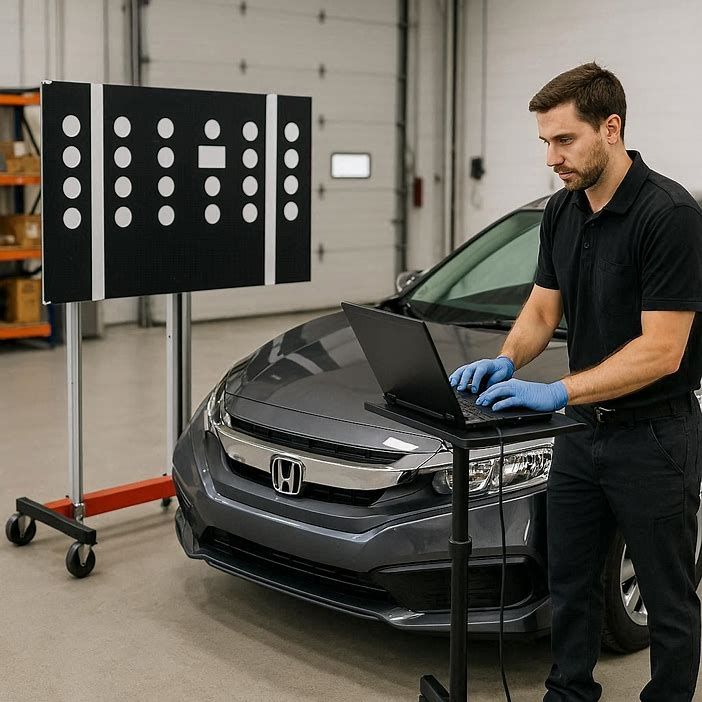
Advanced Driver Assistance Systems (ADAS) are now standard in many modern Honda vehicles, relying heavily on cameras and sensors mounted directly on or near the windshield to function correctly. The National Highway Traffic Safety Administration (NHTSA) notes that features such as lane departure warnings, automatic emergency braking, and forward collision alerts depend on precise sensor alignment to interpret road conditions accurately. Even a small disruption in this setup can affect how a vehicle “sees” the world.
When a windshield is damaged, the impact goes beyond visibility alone. Cracks or chips can interfere with embedded sensors, which is why services like Honda windshield replacement San Antonio have become essential for maintaining both safety and system performance. These specialized services address not just the glass itself but also the complex calibration process required afterward, ensuring that safety technologies continue to function as intended.
The Hidden Problem Behind Windshield Damage
A damaged windshield may appear to be a straightforward repair issue, but in modern vehicles, it often triggers a chain reaction of system inconsistencies. Many Honda models integrate forward-facing cameras behind the windshield to support lane assist and adaptive cruise control. When the glass is cracked or replaced incorrectly, the angle or positioning of these cameras may shift, leading to inaccurate readings.
Insurance Institute for Highway Safety (IIHS) research shows that even minor misalignment of ADAS cameras can reduce the effectiveness of collision prevention systems. Drivers may experience delayed warnings, false alerts, or complete system deactivation. These issues highlight a growing concern: windshield damage is no longer just a cosmetic or structural issue, but a safety-critical one.
Why Calibration Is a Critical Step
Replacing a windshield in an ADAS-equipped vehicle requires more than fitting a new piece of glass.
Calibration ensures that all sensors and cameras are reset to manufacturer specifications. This process allows systems like lane departure warning and traffic sign recognition to interpret data accurately based on the vehicle’s exact positioning.
There are two main types of calibration used in modern automotive service. Static calibration is performed in a controlled environment using specialized targets and tools, while dynamic calibration requires driving the vehicle under specific conditions to reset the system. SAE International technical reports emphasize that both methods must meet strict tolerances to ensure ADAS reliability.
Without proper calibration, even a perfectly installed windshield can lead to distorted sensor readings. A slight deviation in camera angle may cause the system to misjudge distances or fail to detect obstacles in time. This is why calibration is no longer optional but a required step in professional windshield replacement services.
How Specialized Services Address Both Glass and Technology
Modern automotive safety systems continue to evolve as vehicles become more software-driven and sensor-dependent. Forward-facing cameras, radar modules, and driver-assist functions now operate as an interconnected network that depends on precise physical alignment and clean optical pathways. Understanding how these systems interact with structural components like windshields provides deeper clarity on why service precision matters. For a more technical breakdown of how these components work together, resources on modern Honda safety systems and windshield technology explain how camera-based systems interpret road data and translate it into real-time driver assistance functions.
Research from automotive engineering studies and industry reports indicates that even minor deviations in sensor positioning can impact lane detection accuracy and collision warning timing. This reinforces the importance of proper installation procedures and post-replacement verification in maintaining system reliability. In vehicles equipped with ADAS, the windshield is not just a protective barrier but an active optical interface that directly influences how the vehicle perceives its environment.
Where Precision Glass Work Meets Advanced Vehicle Technology
Specialized service centers offering Honda-focused windshield replacement combine precision glass installation with advanced recalibration tools. This includes diagnostic scanners that communicate directly with the vehicle’s onboard computer, verifying that all safety systems are restored to factory standards.
By treating windshield replacement as a technical procedure rather than a simple repair, these services help preserve the integrity of vehicle safety systems. The process ensures that lane assist, adaptive braking, and forward collision alerts continue to operate without interruption or error.
Educational Insight: The Risks of Improper Installation
Improper windshield installation can create safety risks that are not immediately visible.
A misaligned camera may fail to detect lane markings, especially in poor weather or low-light conditions. In some cases, false alerts may trigger unnecessary braking or steering adjustments, which can confuse drivers and increase risk on busy roads.
Automotive safety experts stress that ADAS systems are highly sensitive to millimeter-level changes. Even adhesive thickness or slight frame misalignment can affect performance. This is why unqualified installation practices are increasingly discouraged by industry regulators and manufacturers.
Education in automotive technology plays a crucial role here. Understanding how windshields function as part of a vehicle’s digital safety network helps drivers make informed decisions about repair services. It also highlights the importance of choosing technicians trained in modern calibration techniques rather than traditional glass-only repair methods.
Conclusion: Where Automotive Education Meets Precision Service
The evolution of vehicle safety systems has transformed the windshield from a passive component into an active part of a car’s intelligence network. As Honda models continue to integrate more advanced ADAS features, the need for precise installation and calibration becomes increasingly important.
Reliable windshield services ensure that safety technologies remain accurate and responsive, reducing the risk of system failure. In this context, professional Honda windshield replacement solutions are not just repair services but essential contributors to road safety.
Ultimately, the connection between automotive education and technical expertise defines the future of vehicle maintenance. Choosing qualified installers ensures that safety systems continue to perform as designed, supporting both driver awareness and overall road safety in an increasingly technology-driven automotive landscape.