
Vienna has long been recognized as one of Europe’s most organized and environmentally conscious cities. While much attention is often given to its architecture, public transportation, and cultural institutions, another critical system operates quietly behind the scenes, the residential waste disposal in Vienna (entsorgung Wien). Today, Vienna’s waste management sector is evolving into a technology-driven infrastructure network that supports sustainability, public education, and smarter urban development.
Modern residential waste disposal services in Vienna are no longer limited to collecting household garbage on fixed schedules. Instead, they increasingly rely on digital systems, automated processes, and data-driven planning to improve efficiency and reduce environmental impact.
As cities worldwide explore “smart city” models, Vienna’s approach to waste management demonstrates how technology and public awareness can work together to create cleaner, more sustainable urban environments.
The Shift Toward Smart Waste Management
Traditional waste collection systems often relied on static schedules and manual planning. Trucks followed fixed routes regardless of how full containers were, which sometimes led to unnecessary fuel consumption, overflowing bins, or inefficient collection timing.
Vienna’s modern waste disposal sector is gradually shifting toward smarter infrastructure supported by digital technology.
Smart waste management systems use real-time data to improve collection efficiency and resource allocation across residential districts. Key technologies now influencing residential waste services include:
- Sensor-equipped waste containers
- Digital route optimization software
- Automated waste sorting systems
- Data analytics platforms
- GPS fleet tracking
- Smart scheduling systems
By integrating these tools, waste management providers can make faster and more informed operational decisions while reducing environmental strain.
This transition reflects a broader urban trend where municipal services become increasingly connected through digital infrastructure and intelligent automation.
Sensor Technology and Efficient Collection Systems
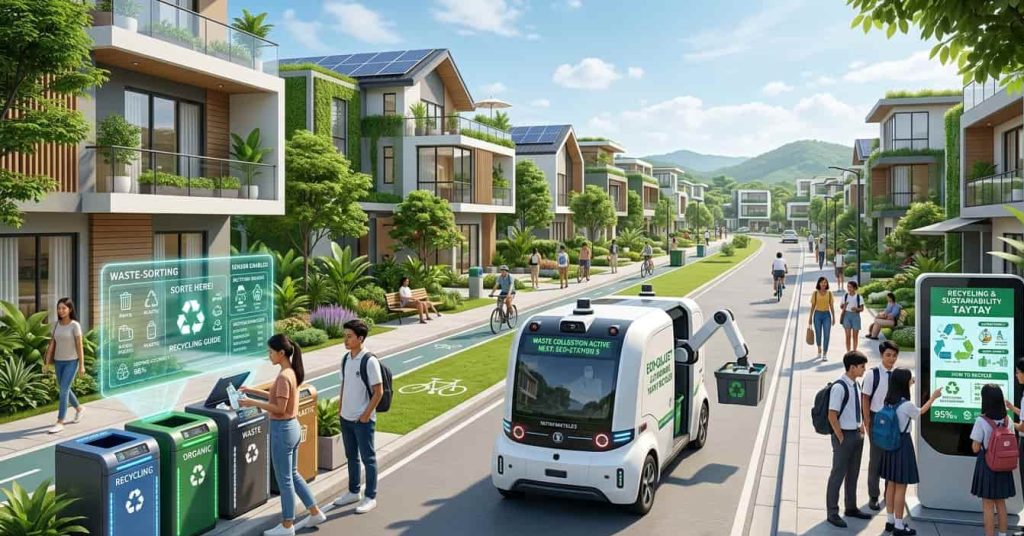
One of the most important innovations in modern waste disposal involves the use of sensor-equipped bins. These smart containers can monitor fill levels in real time and transmit information directly to waste management systems.
Instead of emptying every container on a rigid schedule, collection teams can prioritize areas where bins are close to capacity, that also create several advantages:
- Reduced unnecessary pickups
- Lower fuel consumption
- Improved traffic efficiency
- Faster response to overflow risks
- Reduced operational costs
Route optimization software further improves efficiency by calculating the fastest and most fuel-efficient collection paths based on current waste levels, road conditions, and traffic patterns. For a city like Vienna, where urban density and environmental standards are both high priorities, these systems help balance operational performance with sustainability goals.
The result is a more responsive and intelligent waste management network that supports cleaner residential communities while minimizing wasted resources.
Recycling Analytics and Automated Sorting
Recycling plays a central role in Vienna’s environmental strategy, and technology has become increasingly important in improving recycling accuracy and waste processing efficiency. Modern recycling facilities now use automated sorting systems capable of separating materials such as:
- Plastics
- Glass
- Paper
- Aluminum
- Organic waste
These systems often rely on optical scanners, artificial intelligence, conveyor sensors, and robotic sorting mechanisms to identify recyclable materials more accurately than traditional manual sorting methods.
Data analytics platforms also help authorities study waste trends across residential districts. By analyzing disposal patterns, cities can identify:
- Areas with low recycling participation
- Seasonal waste fluctuations
- Contamination issues in recycling bins
- Opportunities for educational campaigns
In many ways, waste management is becoming a highly technical field that depends as much on software and analytics as it does on physical collection infrastructure.
Education as a Core Part of Sustainability
Technology alone cannot solve urban waste challenges. Public participation remains essential, which is why educational programs are a major component of Vienna’s waste management strategy.
Educational campaigns often begin in schools, where students learn about recycling systems, environmental responsibility, and sustainable living habits from an early age. Community workshops, public awareness campaigns, and digital information platforms further reinforce these lessons for adults.
By combining advanced infrastructure with strong public awareness, Vienna creates a system where technology and community behavior support one another.
Waste Management and the Future of Smart Cities
Residential waste disposal is increasingly connected to broader smart city infrastructure. Modern urban systems now rely on integrated technologies that allow transportation, utilities, environmental monitoring, and sanitation services to communicate through centralized digital networks. In the future, waste management systems may become even more advanced through:
- AI-driven predictive collection models
- Autonomous collection vehicles
- Real-time environmental monitoring
- Smart recycling reward systems
- Internet of Things (IoT) integration
These technologies could help cities further reduce emissions, improve recycling performance, and optimize resource management.
Vienna’s focus on organized urban planning and environmental innovation positions it as an important example of how cities can modernize essential services without sacrificing quality of life.
Technological Advantage Implementation in Waste Disposal Services
Residential waste disposal services in Vienna demonstrate how modern cities can combine technology, sustainability, and education to build smarter urban environments. Through sensor-equipped bins, route optimization systems, recycling analytics, and automated sorting technologies, Vienna is transforming waste management into a highly efficient digital infrastructure network.
At the same time, public education programs ensure residents actively participate in recycling and sustainability efforts, strengthening the effectiveness of these technological systems.